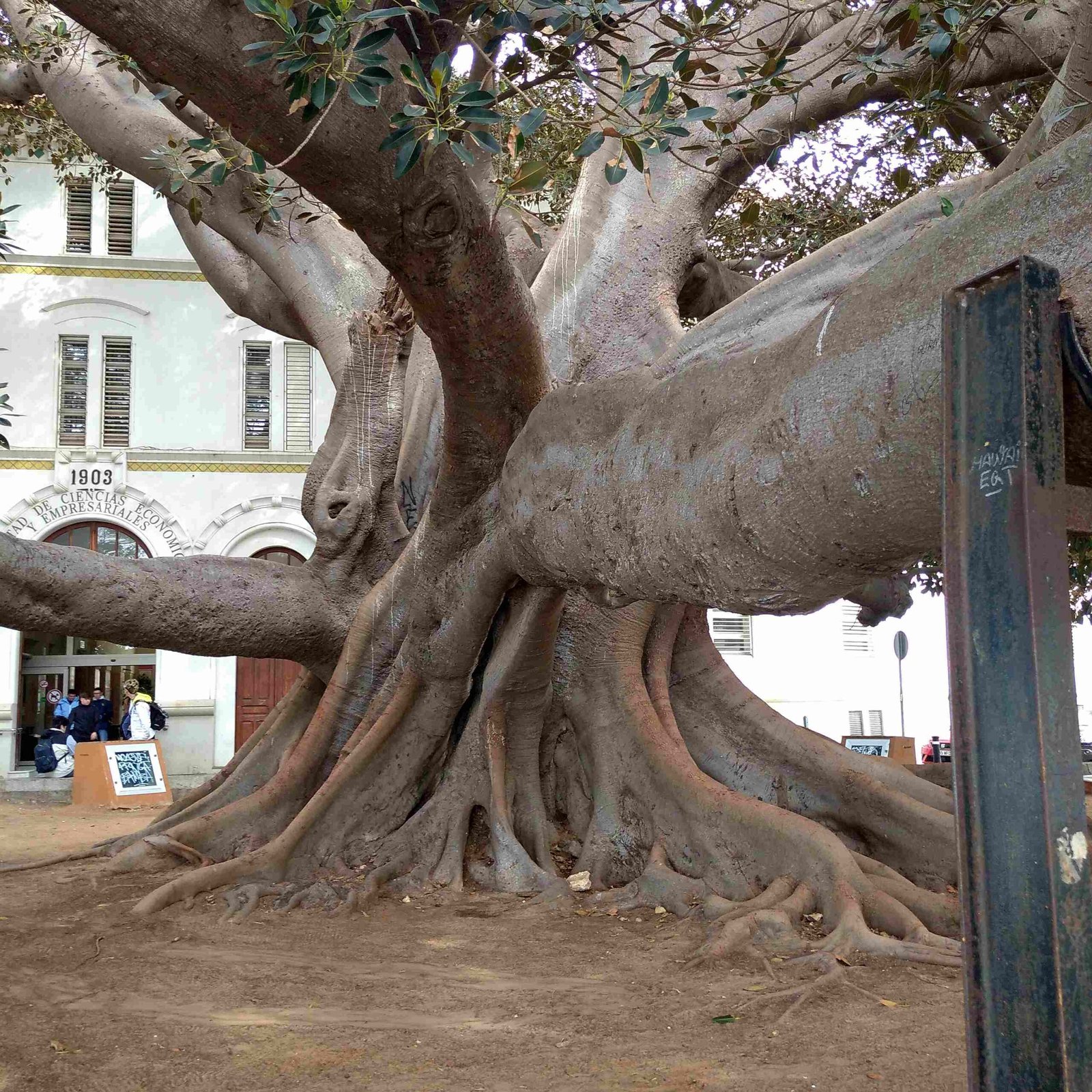
Ficus macrophylla, better known as the Moreton Bay fig, is famous for its enormous size, spreading branches and dramatic aerial roots. Cádiz is home to some particularly impressive examples, including the huge trees beside the former Hospital de Mora near La Caleta.
Their size is remarkable, but the story behind Cádiz’s famous figs is perhaps even more interesting.
Named for their unique growth process, strangler fig seed germinate in the canopy of a host tree where they grow and tap in to the sap system. They then produce aerial roots that develop ground wards over a long period. Once their roots reach the ground they grow quickly, eventually enveloping and “strangling” their host to stand independently. Some specimens soar to heights of 60 meters, with sprawling crowns sometimes spanning more than 70.
The Audio Guided Tour of Cádiz

The famous strangler figs of Cádiz are included in the Visit Cádiz audio guided tour. Check it out here: https://visitingcadiz.com/immerse-yourself-in-cadizs-rich-history-a-guided-audio-tour/
Or, just scan the QR code on the left with your mobile phone.
Enormous Branches and Trunk
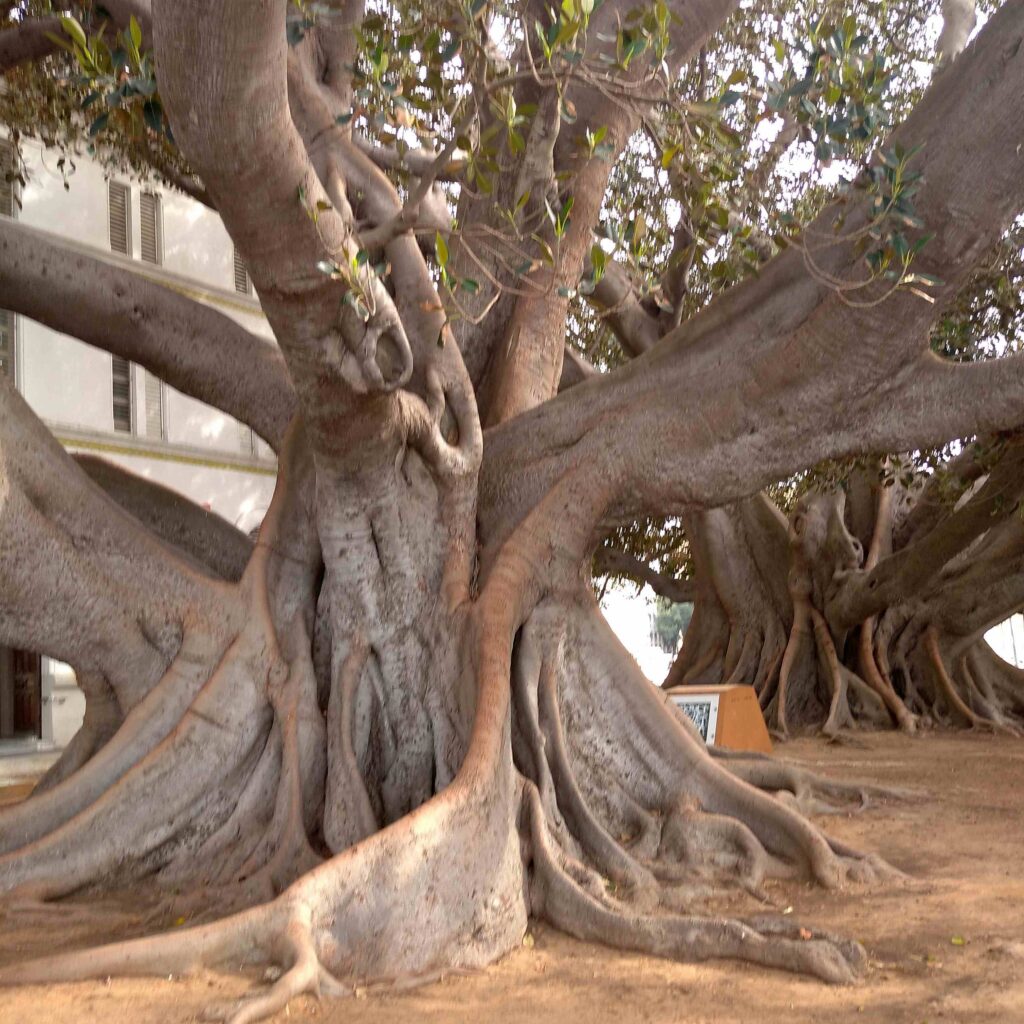
The Famous Strangler Figs of Cádiz. Relics of the Past
These specimens a hundred metres or so along from the Caleta beach, planted in 1903, near the white shuttered “Mora” hospital, truly are living relics of Cádiz’s past. “The old hospital is now the university faculty of sciences and buzzes with students and teachers coming and going.
Locals say that the trees originated from seeds brought by two missionary nuns who had travelled from India, they were apparently intended for northern Spain but they found a permanent home in Cádiz after the nuns fell ill and passed away whilst being cared for at the Mora Hospital.
Today, these majestic trees stand as a tribute to their caretakers, with the roundabout they occupy transformed into a pedestrian area to protect them from vehicular pollution. Vigilant care ensures their well-being, evident in the supportive structures safeguarding their massive branches.
These living monuments occasionally make the headlines, like the recent incident where a huge branch fell, or the amusing tale of a tourist so captivated by their photogenic allure they spent an entire week photographing them from all angles day and night!

The enduring presence of these figs in Cádiz has to be a testament to their remarkable journey and the lasting impact of two humble missionaries who carried them across the continents.
In fact there were four examples brought to Cádiz by the nuns. The other two were planted across the other side of the city and they can be found in the gardens of the Alameda Apodaca y Marqués de Comillas. these gardens are well worth a visit for the scenic gardens and sea views.
Frequently Asked Questions About the Strangler Figs of Cádiz
The strangler figs in Cádiz are Ficus macrophylla trees known for their immense size and dramatic growth habit. These trees begin life by germinating in the branches of a host tree. Over time, they send aerial roots downward that envelop and eventually replace the host, standing as independent giants. Some can reach 60 meters tall with canopies spanning over 70 meters.
These trees were introduced to Cádiz around 1903. According to local legend, two missionary nuns brought seeds from India intending to plant them in northern Spain. Sadly, they fell ill and passed away while being cared for at the Mora Hospital in Cádiz. The seeds were planted locally instead, and the trees became a lasting tribute to the nuns’ journey and those who cared for them.
You’ll find two of the oldest and most famous specimens near Caleta Beach, next to a roundabout that has been pedestrianised for their protection. Other striking examples can be seen in the Alameda Apodaca y Marqués de Comillas gardens, just a short walk from the old Mora Hospital, now part of the University of Cádiz.
These trees are living landmarks—symbols of endurance and local heritage. Their unusual history and colossal forms have made them iconic features of the city, often appearing in local stories, photos, and tourist itineraries.
Cádiz takes special care of its strangler figs. Areas around them have been pedestrianised to reduce damage from pollution and traffic. Some branches are supported with iron posts to prevent collapse, and the trees are regularly monitored for safety and health.
Yes, the strangler figs are featured in the Visit Cádiz audio-guided tour and are highlighted in many walking routes. Their size and setting make them popular stops for photos and storytelling.

I’ve been living in this lovely area of Western Andalucia for the last 20 years or so and dedicate most of my time to the running of English language tourist information websites for the towns of Cádiz, Ronda, Grazalema, the famous or infamous Caminito del Rey, and also Wildside Holidays, which promotes sustainable and eco-friendly businesses running wildlife and walking holidays in Spain. My articles contain affiliate links that will help you reserve a hotel, bus, train or activity in the area. You don’t pay more, but by using them you do support this website. Thankyou!