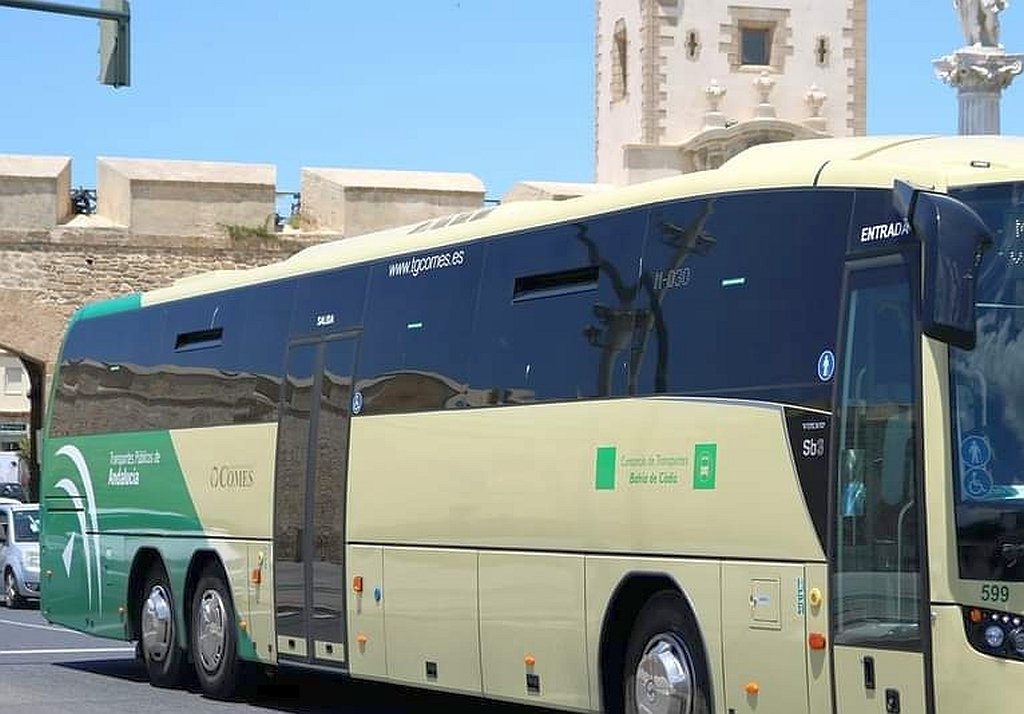
Cádiz is a compact city, and most of the historic centre is easiest to explore on foot. However, the city’s urban buses are useful when travelling between the old town and the modern city, reaching the beaches, or visiting areas further along the peninsula.
Cádiz has five main urban bus lines:
- Line 1
- Line 2
- Line 3
- Line 5
- Line 7
For most visitors, Lines 1 and 7 are particularly useful, especially when travelling towards the beaches. Lines 2, 3 and 5 are more useful for specific neighbourhoods and destinations.
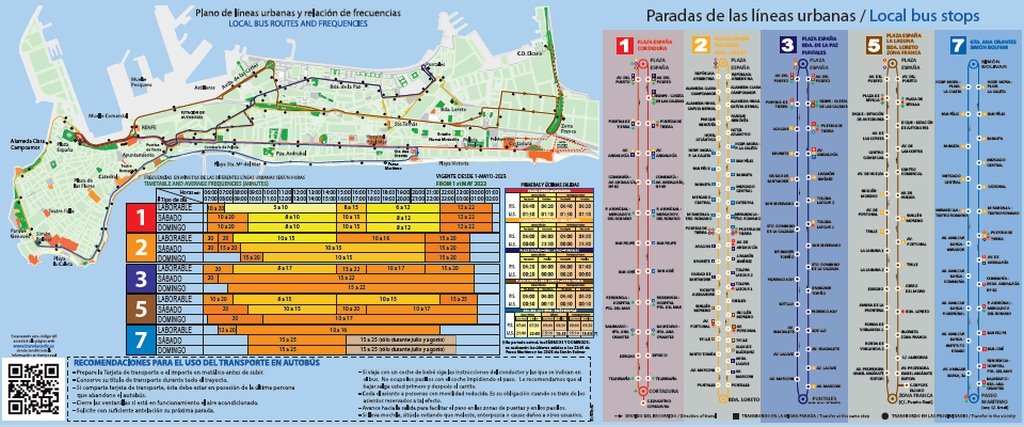
Important: Routes, stops, timetables and fares can change. Check the official information before travelling, particularly during Carnival, Semana Santa, festivals, roadworks and public holidays.
Book Your Journey to Cádiz
Planning to travel to Cádiz by train or bus? Omio makes it easy to compare transport options and book your journey in advance.
Search for trains and buses to Cádiz, compare departure times and prices, and choose the option that best suits your trip. You can use the booking widget below to check available services and plan your journey from other cities in Spain or elsewhere in Europe.
Affiliate disclosure: We may earn a small commission if you book through this link, at no extra cost to you.
Are Cádiz buses useful for tourists?
Yes, although their usefulness depends on where you are staying and where you want to go.
If you are staying in the Casco Histórico, many of Cádiz’s main attractions are within walking distance, including:
- Cádiz Cathedral.
- The Roman Theatre.
- Plaza de las Flores.
- Mercado Central.
- La Viña.
- La Caleta.
- Plaza de España.
- Many of the city’s tapas bars and restaurants.
Buses become more useful when travelling:
- From the old town to the modern city.
- To Playa Santa María del Mar.
- To Playa Victoria.
- Towards Cortadura.
- To residential districts such as Loreto, Puntales and La Laguna.
- To areas around the railway station.
- Along Avenida de Andalucía and the main city avenues.
- During very hot weather, when a long walk may be uncomfortable.
For current route information, stops and timetables, check the official Cádiz urban bus information provided by Cádiz City Council.
Cádiz urban bus fares
The current standard urban bus fare is:
Single journey
€1.10
This is the ordinary single-ticket price when paying for one journey on the bus.
There are also travel-card options, including:
- Ordinary Bonobús.
- Special Bonobús.
- Youth and university cards.
- Other concessionary cards for eligible users.
For most short-stay visitors, paying for individual journeys is likely to be the simplest option. If you expect to use the bus several times each day, check the current travel-card prices to see whether one would be better value.
You can check the latest fare information through the official Cádiz bus fare information .
Regional buses travelling between Cádiz and nearby towns use a different fare system. For those services, see the Consorcio de Transportes de la Bahía de Cádiz .
Line 1: Plaza de España to Cortadura
Line 1 is one of the most useful routes for visitors. It connects Plaza de España in the historic centre with Cortadura, travelling through the modern city.
It is particularly useful for reaching the beaches and for travelling between the old town and areas around Avenida de Andalucía and Avenida Ana de Viya.
Useful areas and stops on Line 1
Depending on the direction of travel, useful stops include:
- Plaza de España – near the northern end of the historic centre.
- Puertas de Tierra – the main gateway between the old and modern city.
- Plaza Asdrúbal – useful for Playa Santa María del Mar.
- Glorieta Ingeniero de la Cierva – useful for Playa Victoria.
- Cortadura – near the southern end of Cádiz and the long Cortadura beach.
Where should you use Line 1?
Line 1 is useful if you want to:
- Travel from the old town towards the beaches.
- Reach Playa Santa María del Mar.
- Visit Playa Victoria.
- Travel along the main avenue through modern Cádiz.
- Avoid walking the entire length of the city.
- Reach Cortadura without taking a taxi.
For the latest route details and stop information, check the official urban bus route information .
Line 2: Plaza de España, La Viña, La Caleta, Loreto and Puntales
Line 2 connects the centre of Cádiz with areas including La Viña, Campo del Sur, La Caleta, Loreto and Puntales.
It can be useful for travelling around the edge of the historic centre and towards the eastern side of the city.
Useful areas on Line 2
Line 2 serves or passes near areas including:
- Plaza de España.
- Campo del Sur.
- La Caleta.
- La Viña.
- Cádiz Cathedral.
- Puertas de Tierra.
- San Severiano.
- Loreto.
- Puntales.
When is Line 2 useful?
Line 2 may be useful for:
- Reaching La Caleta and La Viña.
- Travelling around Campo del Sur.
- Getting towards Loreto and Puntales.
- Avoiding a longer walk in hot weather.
- Travelling between the historic centre and the modern city.
If you are already near Cádiz Cathedral, Plaza de las Flores or La Viña, walking may still be quicker than waiting for a bus.
Line 3: Plaza de España to Puntales
Line 3 also connects the historic centre with the modern city and continues towards Loreto and Puntales.
It provides an alternative route to Line 1 for reaching Puertas de Tierra and parts of the city beyond the old town.
Useful areas on Line 3
The route serves or passes close to areas including:
- Plaza de España.
- Puertas de Tierra.
- San Severiano.
- Mercado Virgen del Rosario.
- Parque de Varela.
- Avenida del Guadalquivir.
- Loreto.
- Puntales.
Line 3 can be useful if you are staying outside the historic centre or travelling to San Severiano, Parque de Varela or Puntales.
It is also worth checking if the nearest Line 3 stop is more convenient than the Line 1 route.
Line 5: Plaza de España to Zona Franca
Line 5 connects the city centre with La Laguna, Loreto and Zona Franca, travelling through parts of the modern city.
It is less likely to be needed by visitors concentrating on the historic centre, but it can be useful for particular destinations.
Useful areas on Line 5
Line 5 serves or passes near:
- Plaza de España.
- La Laguna.
- Avenida Juan Carlos I.
- Segunda Aguada.
- Avenida de Portugal.
- Loreto.
- Zona Franca.
- Commercial and industrial areas of Cádiz.
The route may be useful for reaching:
- La Laguna.
- Segunda Aguada.
- Commercial areas.
- Parts of the modern city.
- Zona Franca.
- Areas away from the main tourist centre.
For a normal sightseeing visit, Lines 1, 2, 3 and 7 are generally more likely to be useful.
Line 7: Beaches, La Caleta and the historic centre
Line 7 is particularly useful for visitors because it connects the beach areas with parts of the historic centre.
The route runs between the area around Glorieta Ingeniero de la Cierva and Simón Bolívar, travelling along the seafront and through areas including:
- Playa Victoria.
- Playa Santa María.
- Campo del Sur.
- Cádiz Cathedral.
- La Viña.
- La Caleta.
- Plaza Fragela.
- Gran Teatro Falla.
Useful areas and stops on Line 7
Depending on your destination, useful areas include:
- Glorieta Ingeniero de la Cierva – near Playa Victoria.
- Playa Victoria.
- Playa Santa María del Mar.
- Campo del Sur.
- Cádiz Cathedral.
- La Viña.
- La Caleta.
- Plaza Fragela.
- Gran Teatro Falla.
- Simón Bolívar.
When should you use Line 7?
Line 7 is useful if you want to:
- Travel between the beaches and the historic centre.
- Reach La Caleta without walking from the modern city.
- Travel along the seafront.
- Visit the Gran Teatro Falla area.
- Avoid walking the full distance between Playa Victoria and the old town.
The service pattern can vary seasonally, so check the current timetable before relying on Line 7 for a particular journey.
Which bus should you take to the beaches?
Playa Santa María del Mar
Useful options include:
- Line 1 – get off around Plaza Asdrúbal.
- Line 7 – use a stop serving the beach and seafront area.
Playa Victoria
Useful options include:
- Line 1 – get off near Glorieta Ingeniero de la Cierva.
- Line 7 – use a stop along the seafront.
Cortadura
For Playa de Cortadura, Line 1 is the most useful urban bus route.
Cortadura is further from the historic centre, so taking the bus can save considerable time, especially during the hotter months.
Which bus should you take to the historic centre?
If you are travelling from the modern city towards the old town, look for buses travelling towards:
- Plaza de España.
- Puertas de Tierra.
- Campo del Sur.
- Cádiz Cathedral.
- La Viña.
The best line depends on your starting point:
- Line 1 – useful along the main avenue and towards Plaza de España.
- Line 2 – useful around Campo del Sur, La Viña and La Caleta.
- Line 3 – useful for Puertas de Tierra, San Severiano and Puntales.
- Line 5 – useful for La Laguna, Segunda Aguada, commercial areas and Zona Franca.
- Line 7 – useful for the beaches, seafront, La Caleta and parts of the historic centre.
If you are already close to the cathedral or central old-town attractions, walking is usually the easiest option.
Where can you check Cádiz bus routes and stops?
The official Cádiz City Council transport page provides information about the five urban routes:
Use the official page to check:
- Current routes.
- Stop locations.
- Timetables.
- Route maps.
- Changes to services.
- Downloadable information for each line.
For buses connecting Cádiz with nearby towns such as San Fernando, Puerto Real, El Puerto de Santa María, Chiclana and other destinations around the Bay of Cádiz, use:
These regional services are separate from the ordinary Cádiz city buses and may have different fares and ticketing arrangements.
Cádiz tourist bus
Cádiz also has a separate City Sightseeing tourist bus. This is not the same as the ordinary urban bus service.
The tourist bus is designed for sightseeing and includes audio commentary. Its stops include areas such as:
- Avenida del Puerto.
- Plaza de la Hispanidad.
- Puerta de Tierra.
- Cádiz Cathedral.
- Playa de la Caleta.
- Parque Genovés.
- Plaza de España.
- Playa Santa María.
- Playa Victoria.
- Plaza de Sevilla.
- Other points around Cádiz and the Bay.
The tourist bus may be suitable if you want a sightseeing overview of the city or prefer a hop-on, hop-off service. It is more expensive than the ordinary urban bus.
Tips for using buses in Cádiz
Have small change available
If you are buying a single ticket on the bus, having small coins is useful.
Check the direction
The same line may travel in different directions. Check the destination displayed on the bus before boarding.
Allow extra time
Buses may take longer during:
- Summer beach days.
- Carnival.
- Semana Santa.
- Public holidays.
- Road closures.
- Festivals and major city events.
Check the stop before travelling
Some stops are more useful for residents than tourists. Check the walking distance between the stop and your final destination.
Walking is often best in the old town
The historic centre is compact. Walking is usually the best way to explore its narrow streets, squares, markets, churches, tapas bars and waterfront.
Final advice
For most visitors, the simplest approach is:
- Walk around the historic centre.
- Use Line 1 for the main route towards the beaches and Cortadura.
- Use Line 2 for La Viña, La Caleta, Campo del Sur, Loreto and Puntales.
- Use Line 3 as an alternative route towards Puertas de Tierra, San Severiano and Puntales.
- Use Line 5 for La Laguna, Segunda Aguada, commercial areas and Zona Franca.
- Use Line 7 for the seafront, beaches, La Caleta and parts of the historic centre.
- Check the official route and timetable information before travelling.
Cádiz’s buses are inexpensive and useful, especially when travelling beyond the historic centre. However, the old town is best experienced slowly on foot — with time to explore its squares, markets, waterfront and tapas bars.
Frequently Asked Questions About Buses in Cádiz
Yes. The historic centre is compact and most major attractions can be reached on foot. Buses are more useful for travelling to the beaches, the newer city and accommodation outside the old town.
Line 1 travels towards Playa de la Victoria, with a useful stop near Glorieta Ingeniero La Cierva. Line 7 also connects the beach area with the historic centre.
Line 2 and Line 7 serve areas close to La Caleta. Check the current route and stop information before travelling.
The published ordinary single fare for 2026 is €1.10. The ordinary Bonobús journey is listed at €0.70, subject to the applicable fare conditions and temporary discounts.
The main interurban bus station is at Plaza de Sevilla, close to the port, railway station and historic centre.
Yes. The Bahía de Cádiz transport network includes bus services between Cádiz and Jerez. Compare bus and train options before travelling, as the best choice depends on your destination and departure time.
No. The tourist bus is a sightseeing service with its own route, tickets and commentary. The ordinary public buses are used for everyday travel around the city.
For urban routes, use the Cádiz city council’s urban bus information. For journeys between Cádiz and other towns, use the Bahía de Cádiz transport consortium’s journey planner and timetable pages.

I’ve been living in this lovely area of Western Andalucia for the last 20 years or so and dedicate most of my time to the running of English language tourist information websites for the towns of Cádiz, Ronda, Grazalema, the famous or infamous Caminito del Rey, and also Wildside Holidays, which promotes sustainable and eco-friendly businesses running wildlife and walking holidays in Spain. My articles contain affiliate links that will help you reserve a hotel, bus, train or activity in the area. You don’t pay more, but by using them you do support this website. Thankyou!